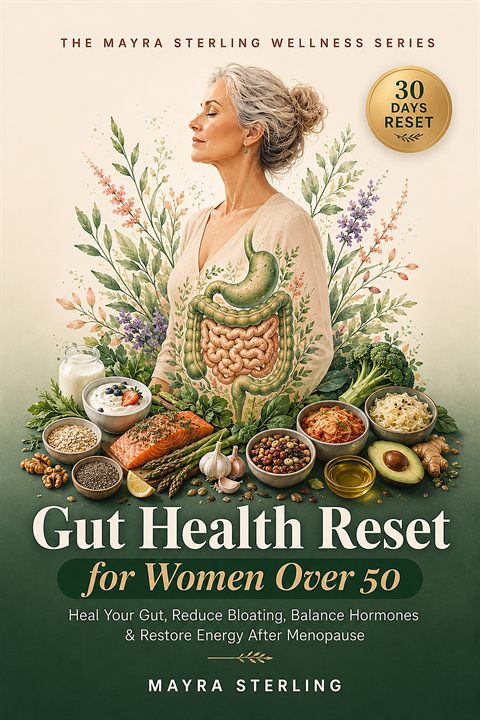
The short version: your gut and your hormones are not two separate systems. A specific community of gut bacteria — the oestrobolome — helps regulate how much oestrogen circulates in your body and how much is cleared. When menopause changes your hormones, it changes your gut. When your gut changes, it changes how you handle the hormones you have left. That is why bloating, sluggish digestion and sudden food intolerances arrive at fifty in women who have never had a digestive problem in their lives.
The gut–hormone connection nobody told you about
Most women are told that digestion “just slows down” with age. That is a description, not an explanation, and it leaves you with nothing to do about it.
The real picture is a two-way street. Falling oestrogen reduces gut motility and thins the gut lining. At the same time the gut bacteria that help process oestrogen shift in composition. Each change makes the other worse, which is why this tends to appear suddenly rather than gradually — a system that was compensating stops compensating.
It also explains the symptoms that seem unrelated to digestion at all: the flat energy, the skin that changed, the joints that ache in the morning. Chapter 10 follows those threads back to the gut.
Signs your gut needs a reset
Chapter 2 turns these into an actual assessment rather than a list to worry about — how many, how often, and what that combination points to.
Why the usual gut advice does not fit women over 50
Most gut advice is written for a general audience and quietly assumes a body that is not going through menopause. Applied after fifty it can backfire:
- Generic high-fibre advice can worsen bloating badly if the gut lining is already irritated.
- The probiotic aisle is not one product — strains do different things, and most women are buying at random.
- Fermented foods are excellent for some women here and actively wrong for others.
- The hormone connection is missing entirely from advice not written for this stage of life.
Chapter 3 separates the foods that heal from the ones quietly doing harm — and several in the second group have a health-food reputation.
What is inside
12 chapters and 2 bonus guides
- The gut–hormone connection nobody told you about
- Signs your gut needs a reset right now
- Foods that heal vs foods that are silently harming you
- The 30-Day Gut Reset Protocol — step by step
- Probiotics, prebiotics and supplements — what actually works
- Stress, sleep and your gut — the hidden connection
- Exercise that heals your gut after 50
- Beating bloating and digestive discomfort fast
- Recipes and complete meal plans for gut healing
- Gut health and your skin, hair and joints
- Testing your gut health — what to ask your GP
- Your long-term plan — maintaining results for life
Bonuses: the 7-Day Quick-Start Guide and the Ultimate Gut-Healing Morning Elixir.
Chapter 8 exists because the thirty-day protocol takes thirty days and the bloating is uncomfortable tonight. It is the short-term relief chapter — what helps quickly, while the longer work is still going on underneath.
Start the reset
Instant download, with the recipes and meal plans included. Or order the paperback if you would rather cook from a book that stays open.
Get the PDF edition — $9Who this is for
- Women over 50 whose digestion changed without their diet changing.
- Anyone whose bloating has become predictable enough to plan clothes around.
- Women who have been told it is IBS or ageing and given nothing to act on.
- Anyone who suspects their gut and their hormones are connected and wants the actual mechanism.
Who it is not for: anyone wanting an elimination diet to follow forever, or a diagnosis. It is a thirty-day reset with a long-term plan attached, and Chapter 11 is about what to ask your GP — because some of these symptoms need investigating, not managing.
Common questions
Why am I so bloated after menopause?
Two things change at once. Falling oestrogen slows gut motility and affects the gut lining, and the community of bacteria that help process oestrogen — the oestrobolome — shifts at the same time. Each makes the other worse, which is why bloating often appears suddenly in women who never had digestive trouble before.
Can gut health affect my hormones?
Yes, and it runs both ways. The oestrobolome helps regulate how much oestrogen circulates and how much is cleared. That is why gut work has effects well beyond digestion, and why the book treats the two as one system rather than two.
Do I need probiotics?
Possibly, but not the way most people buy them. Different strains do genuinely different things, and taking a random one is why so many women conclude probiotics do not work. Chapter 5 covers what the evidence actually supports for women at this stage.
Is more fibre the answer?
Not always, and this is where general advice can make things worse. If the gut lining is already irritated, adding a lot of fibre can increase bloating rather than relieve it. Chapter 3 covers what to add, what to remove first, and in what order.
Which format should I buy?
The paperback if you want it open on the kitchen counter for the recipes and meal plans. The PDF from Gumroad for instant access and printable pages. Kindle and Google Play Books are the same book in reflowable ebook form.
Sources and further reading
Independent information from public health organisations, if you want to check what this page says or read further:
About the author
Mayra Sterling writes practical wellness guides for women over 50 — on sleep, stress, brain fog, gut health and the nervous system. The books are built the way she wanted to be spoken to: no scare tactics, no supplement affiliate links, no promises of a cure. Just an honest explanation of what changed in your body and what you can do about it this week. More about Mayra.
 Nutrition & Supplementation in Menopause 50+
 Cortisol Reset for Women Over 50
 Vagus Nerve Reset for Women Over 50
 The Menopause Sleep Reset