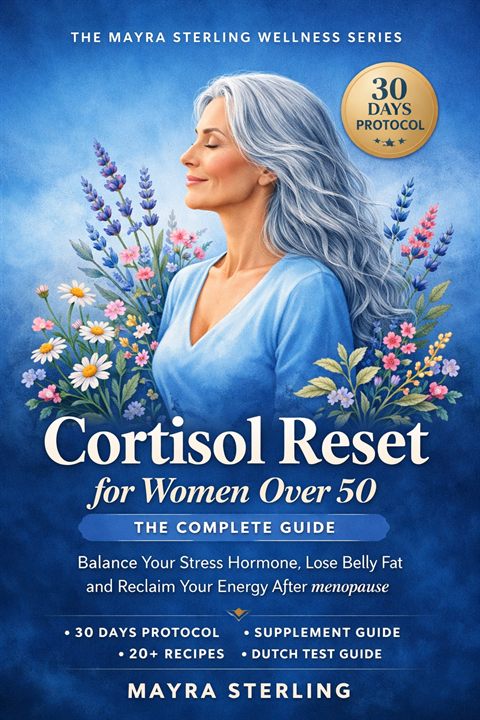
The short version: cortisol is the hormone that gets you up in the morning and carries you through a crisis. It is supposed to peak shortly after you wake and taper off by evening. After menopause that curve often flattens or flips — low when you need it, high when you are trying to sleep. You feel it as exhaustion that a good night never fixes, a body that holds weight it never held before, and a temper that arrives faster than it used to. This book identifies which of the four cortisol patterns you have, then rebuilds the curve over thirty days.
Why cortisol changes after 50
Oestrogen does more than run your cycle. It also buffers the body’s stress response — damping how sharply cortisol rises and helping it clear afterwards. As oestrogen falls through perimenopause and after, that buffer thins out.
The stress in your life may be exactly what it always was. What changed is how hard it lands and how long it lingers. This is the part women almost never get told, and it is why so many arrive at fifty convinced they have simply become worse at coping. They have not. The chemistry underneath moved.
Broken sleep then closes the loop. Cortisol that stays high into the evening keeps you from settling; the short night raises cortisol the next day; the next day’s cortisol ruins the next night. Most women reading this are somewhere inside that loop and blaming themselves for it.
The symptoms women mistake for ageing
Any one of these on its own means little. It is the combination and the timing that matter — and that is the point of Chapter 2.
Not all cortisol problems are the same
This is the part that separates the book from the general advice online. There are four distinct patterns of cortisol dysregulation, and they need opposite responses. Treating the wrong one is why so much advice fails:
- Cortisol excess — high all day. Wired, tense, sleeping badly.
- Cortisol deficiency — low all day. Flat, heavy, no reserve for anything.
- Flat curve — no real peak or trough. Every hour feels the same shade of grey.
- Inverted pattern — low in the morning, high at night. Cannot get going, cannot switch off.
Chapter 3 is a scored self-assessment that tells you which one you are, before you change anything.
What is inside
13 chapters and 2 bonus guides
- What cortisol actually does — and why yours is different now
- The four patterns of cortisol dysregulation
- Your cortisol self-assessment, with scoring
- How cortisol creates belly fat — and how to stop it
- The sleep–cortisol cycle, and how to break it
- Cortisol, your brain and mood
- The Cortisol Reset Diet — five principles and a shopping list
- The supplement protocol, with exact dosages and what not to take
- The 30-Day Cortisol Reset Protocol — three phases with tracking charts
- Movement, exercise and nervous system reset techniques
- 10 cortisol-lowering recipes and a 30-day meal plan
- Testing your cortisol — NHS/GP tests and the DUTCH test
- External drivers: relationships, digital stress and work
Bonuses: the 7-Day Cortisol Quick-Start Guide and the Morning Cortisol Ritual.
One chapter surprises most readers: some of the exercise you are doing to fix this is quietly making it worse. An already depleted body reads certain kinds of training as one more stress on the pile — and women who respond in good faith by doing more of it feel worse and cannot understand why. Chapter 10 draws the line: which movement drains the tank, and which fills it.
Start reading today
Instant download. Read it on a tablet or print the log pages and keep them by the bed.
Get the PDF edition — €9Who this is for
- Women in or past menopause who are exhausted and cannot find a cause anyone takes seriously.
- Anyone who has been told their bloods are “normal” and sent home unchanged.
- Women whose weight changed shape rather than amount, without their eating changing.
- Anyone who wants to know which cortisol test to ask for, and what the results mean.
Who it is not for: anyone looking for a quick fix or a diagnosis. It is a thirty-day systematic reset that asks something of you, and it does not replace a doctor. If you have symptoms that worry you, get them looked at — Chapter 12 is written to help you have that conversation properly prepared.
Common questions
What are the symptoms of high cortisol in women over 50?
The pattern women describe most is being tired but wired — exhausted all day, alert at night. Alongside it: waking between 2 and 4 a.m., weight settling round the middle while the rest of the body stays the same, a short fuse, afternoon crashes, salt or sugar cravings, and catching every cold going round. None of these prove high cortisol on their own, which is why the book asks you to identify your pattern rather than guess from one symptom.
Is high cortisol just part of menopause?
Connected, but not the same thing. Oestrogen helps buffer the stress response, so as it falls the same stress lands harder and clears more slowly. That is why stress you used to absorb in your thirties can now flatten you. It is a real physiological change, not a loss of resilience.
Do I need a cortisol test before reading this?
No. Chapter 3 is a scored self-assessment that tells you which of the four patterns fits you, and the thirty-day protocol runs from that. Testing gets its own chapter for readers who want it: Chapter 12 covers what your GP or the NHS can test for free, what the private DUTCH test adds, and how to read the results.
Does high cortisol cause belly fat?
It is one of the reasons weight changes shape rather than only amount after fifty. Chapter 4 explains the mechanism — and, importantly, why the usual response of eating less and training harder can push it in the wrong direction.
Which format should I buy?
The PDF from Gumroad if you want to print the tracking pages or read on a tablet — it is also the edition that supports the author most directly. Kindle and Google Play Books are the same book as a reflowable ebook, better if you read on a phone.
Sources and further reading
Independent information from public health organisations, if you want to check what this page says or read further:
About the author
Mayra Sterling writes practical wellness guides for women over 50 — on sleep, stress, brain fog, gut health and the nervous system. The books are built the way she wanted to be spoken to: no scare tactics, no supplement affiliate links, no promises of a cure. Just an honest explanation of what changed in your body and what you can do about it this week. More about Mayra.
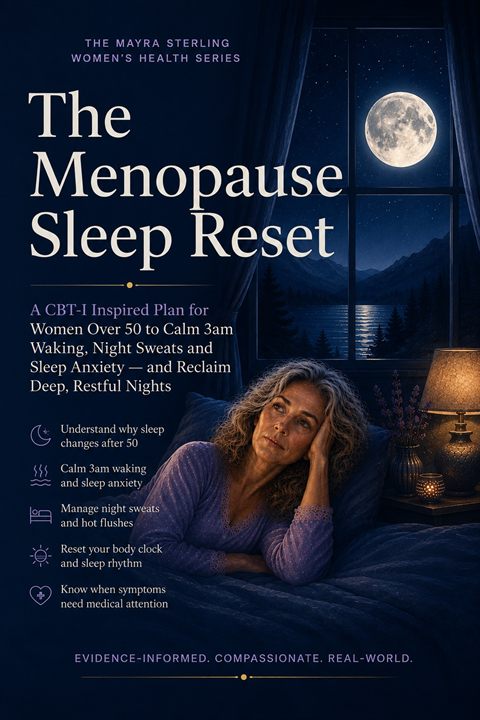 The Menopause Sleep Reset
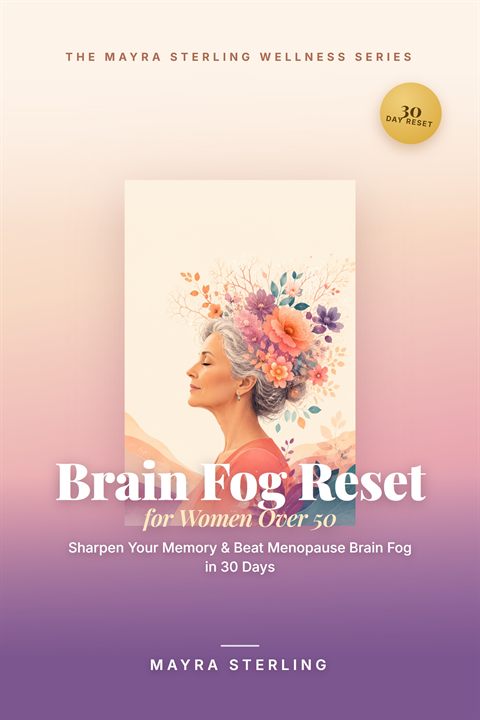 Brain Fog Reset for Women Over 50
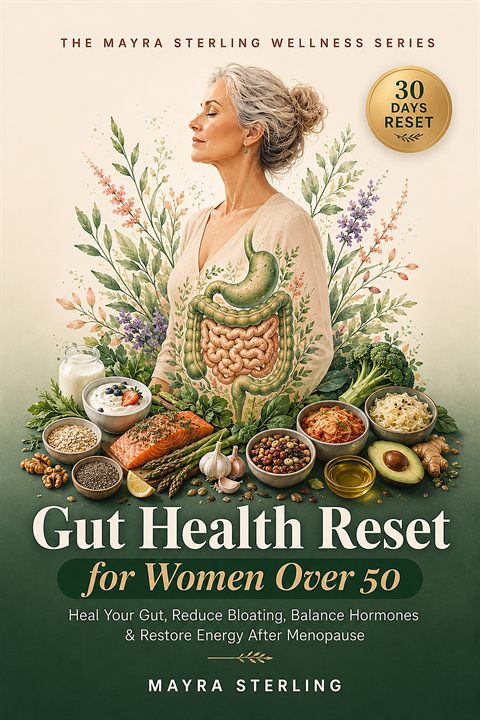 Gut Health Reset for Women Over 50
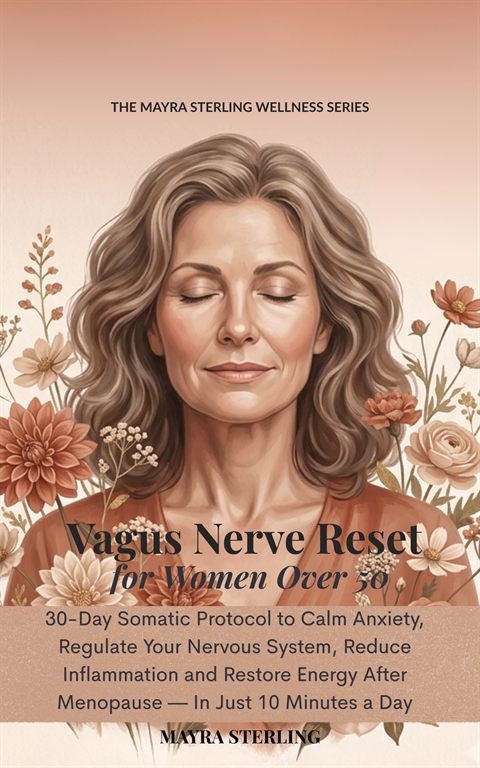 Vagus Nerve Reset for Women Over 50