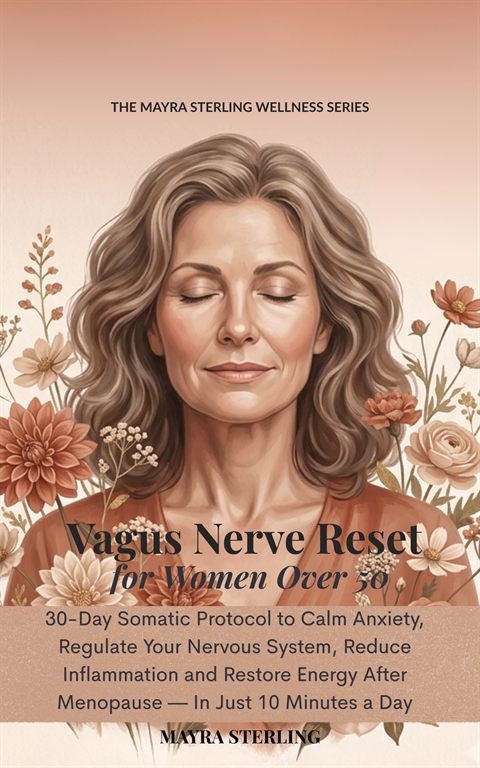
The short version: the vagus nerve is the main line of your parasympathetic nervous system — the “rest and digest” side. It runs from your brainstem to your heart, lungs and gut, and it is what tells your body the emergency is over. How well it does that job is called vagal tone. Menopause lowers it. When vagal tone drops, you stay in a state of alert your body cannot stand down from, and that shows up as anxiety, poor digestion, disturbed sleep and inflammation all at once.
Why menopause changes this system
Oestrogen supports vagal function directly. As it falls, vagal tone tends to fall with it — and that is the physiological reason so many women describe feeling permanently on edge in a way they never did before.
It also explains a cluster of symptoms that look unrelated. Anxiety, bloating, waking at night, a racing heart, aching joints and a short fuse are not six separate problems. They are one system stuck in the wrong gear, showing up in six places.
The useful part: vagal tone is trainable. Unlike your hormone levels, it responds directly to specific, repeatable practices — which is what makes this a book with something to do in it rather than something to know.
Signs of low vagal tone
Chapter 3 turns this into a full self-assessment, because “feeling stressed” is too vague to work with and vagal tone is something you can actually measure changes in.
Why “just relax” has never worked for you
Being told to relax assumes the switch works and you are choosing not to press it. Low vagal tone means the switch itself is not responding. That difference changes what helps:
- It is physical, not mental — a nerve doing its job badly, not an attitude problem.
- It responds to specific inputs — breath, cold, sound, movement — not to willpower or intention.
- It is trainable like a muscle, which means it needs repetition rather than insight.
- It improves measurably, so you can track it rather than hope.
Chapter 5 is the heart of the book: seven techniques you practise daily. They take minutes, and they are the reason this works when years of being told to calm down did not.
What is inside
13 chapters and 2 bonus protocols
- Meet your vagus nerve — the master switch of your health
- Menopause and the vagus nerve — why everything changed after 50
- Are you living with low vagal tone? The complete self-assessment
- The science of vagal activation — what actually works
- The 7 vagal reset techniques — your daily practice
- Vagus nerve nutrition — eating to build vagal tone
- Movement for vagal activation — exercise that heals
- Sleep and the vagus nerve — the overnight repair system
- The vagus nerve and emotional healing
- The complete 30-Day Vagus Nerve Reset Protocol
- Vagus nerve healing recipes
- Supplements for vagal tone
- Tracking your progress — the vagal tone journal
Bonuses: the 7-Day Vagal Quick-Start and the Vagus Nerve Emergency Reset.
The emergency reset bonus is the one readers use first: what to do in the two minutes when something has set you off and you can feel it taking hold, before the whole afternoon is gone.
Learn the switch
Instant download. The seven daily techniques take minutes, and you can start with the first one tonight.
Get the PDF edition — €9Who this is for
- Women over 50 who feel permanently on alert and cannot work out why it started.
- Anyone whose anxiety, digestion and sleep all went wrong at roughly the same time.
- Women who have been told to relax, meditate or do yoga and found it did not reach the problem.
- Anyone who wants something physical and repeatable rather than another mindset exercise.
Who it is not for: anyone looking for a device, a supplement or a single breathing trick. It is a thirty-day training programme for a nerve, and it needs daily repetition. It is also not treatment for an anxiety disorder — if that is what you are dealing with, this sits alongside proper care, not instead of it.
Common questions
What are the symptoms of a low vagal tone?
Feeling braced or on alert most of the time, taking hours rather than minutes to settle after something upsetting, digestive trouble such as bloating and irregularity, shallow chest breathing, a resting heart rate that does not match what you are doing, and being exhausted and wired at the same time. The vagus nerve runs to the heart, lungs and gut, so low tone shows up in all three at once.
Does menopause affect the vagus nerve?
Yes. Oestrogen supports vagal function, so as it falls, vagal tone tends to fall with it. That is the physiological reason many women feel permanently on edge after fifty in a way they never did before — and why it can arrive alongside digestive and sleep changes rather than on its own.
Can you actually improve vagal tone?
Yes — this is the encouraging part. Unlike your hormone levels, vagal tone responds directly to specific physical practices involving breath, cold, sound and movement, and it improves with repetition like a trained muscle. The book includes a tracking journal because the change is measurable rather than a matter of feeling.
How is this different from meditation?
Meditation works on attention. These techniques work on a nerve, through physical inputs it responds to directly. Many women who never got on with meditation find these easier, because they do not require you to quiet your mind first.
Which format should I buy?
The PDF from Gumroad if you want to print the tracking journal. Kindle and Google Play Books are the same book in reflowable ebook form for reading on a phone.
Sources and further reading
Independent information from public health organisations, if you want to check what this page says or read further:
About the author
Mayra Sterling writes practical wellness guides for women over 50 — on sleep, stress, brain fog, gut health and the nervous system. The books are built the way she wanted to be spoken to: no scare tactics, no supplement affiliate links, no promises of a cure. Just an honest explanation of what changed in your body and what you can do about it this week. More about Mayra.
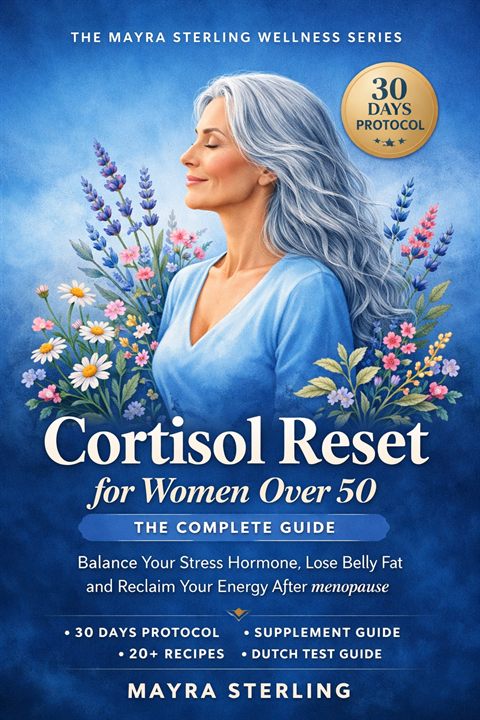 Cortisol Reset for Women Over 50
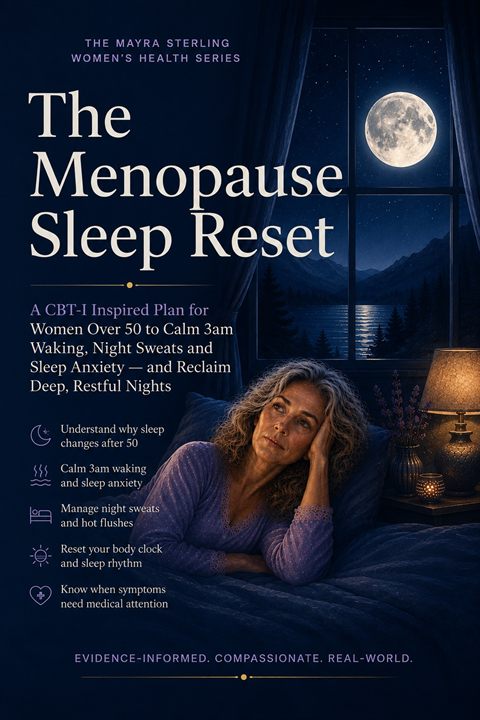 The Menopause Sleep Reset
 Gut Health Reset for Women Over 50
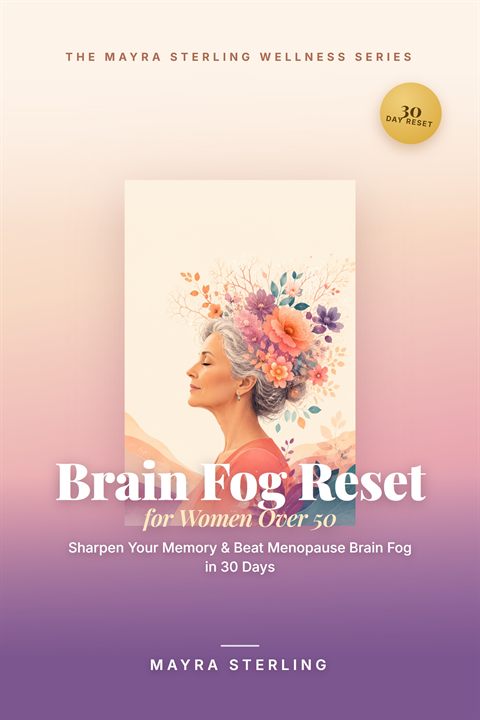 Brain Fog Reset for Women Over 50