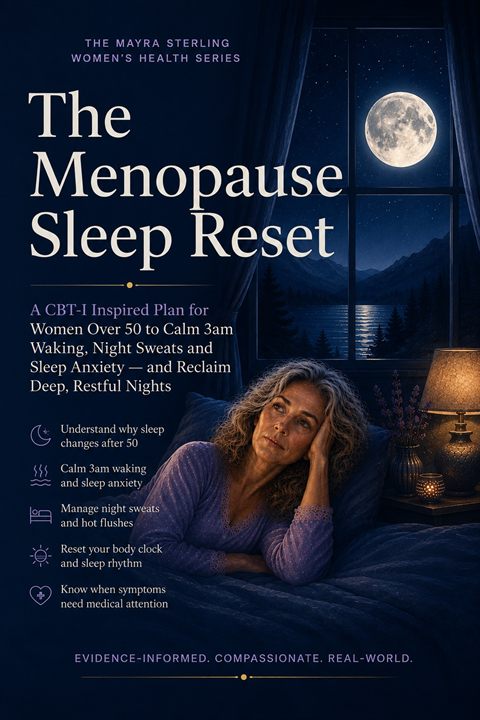
The short version: menopause does not make you a worse sleeper. It removes two of the things that were holding your sleep together. Progesterone, which has a calming effect on the brain, falls — so the switch that used to put you under can stop working reliably. Oestrogen, which helps regulate body temperature, falls too — so you run hotter at night and heat wakes you. Add a cortisol rhythm that has drifted and you get the pattern almost every woman describes: asleep by eleven, awake at three, staring at the ceiling until five.
Why 3 a.m., and not any other hour
This is the detail that convinces women they are not imagining it. Cortisol — the hormone that gets you up and going — does not switch on when your alarm rings. It begins climbing in the small hours, typically from around two or three in the morning, building towards waking.
In your thirties that climb happened while you were still deep asleep, and you slept straight through it. Now your sleep in the second half of the night is lighter, and progesterone is no longer holding you down. That same ordinary hormonal rise can be enough to lift you out. That is one reason many women wake alert rather than groggy, often with your heart going and your mind switching straight to whatever you are worried about.
It also explains why most sleep advice misses. A better bedtime routine helps you fall asleep — and falling asleep was never the problem.
What menopause insomnia actually looks like
Chapter 2 is an assessment of what months of this have actually cost you — not to frighten you, but because most women underestimate it and then wonder why nothing else is working.
Why the usual sleep advice fails after 50
The standard list — no screens, no caffeine after noon, cool dark room — is not wrong. It is aimed at the wrong problem. Almost all of it helps you fall asleep. Menopausal sleep breaks in the second half of the night, for reasons the standard list never touches:
- A hormonal cause, not a behavioural one — progesterone and oestrogen, not willpower.
- A temperature problem your bedroom is either helping with or making worse.
- A cortisol rhythm that has drifted, so your body starts waking two hours too early.
- A circadian clock that has lost its anchors, which is fixable but not with a bedtime routine.
The book takes those in order, because fixing them out of order is why so many women feel they have tried everything.
What is inside
13 chapters and 2 bonus protocols
- Why menopause broke your sleep — the complete biology
- Are you sleep deprived? The true cost assessment
- The sleep environment — your bedroom is either helping or hurting
- The sleep–hormone nutrition plan
- The sleep–wake cycle reset — circadian rhythm repair
- The pre-sleep protocol — your non-negotiable nightly routine
- Managing night sweats and the 3 a.m. waking
- The sleep supplement protocol
- The 30-Day Sleep Reset Protocol
- Sleep restoration recipes
- Exercise and sleep after 50
- When to seek medical help
- Frequently asked questions
Bonuses: the 5-Day Sleep Quick-Start and the Night Sweat Emergency Protocol.
Chapter 7 is the one most readers turn to first, and it is the one that has to be right: what to do at three in the morning when you are awake, hot and starting to panic about how you will get through tomorrow.
Start tonight
Instant download. The quick-start bonus is five days long — you can begin before you finish the book.
Get the PDF edition — €9Who this is for
- Women in perimenopause or menopause who fall asleep easily and lose the second half of the night.
- Anyone whose night sweats have turned sleep into something they dread.
- Women who have tried the standard sleep hygiene advice and found it did nothing.
- Anyone who wants to know when broken sleep stops being hormonal and needs a doctor.
Who it is not for: anyone looking for a sleeping pill by another name, or a single trick. It is a thirty-day reset, and it is honest that the first week is the hardest. It also does not replace medical care — Chapter 12 is specifically about knowing when to stop managing this alone.
Common questions
Why do I wake up at 3am during menopause?
Cortisol begins rising in the small hours to prepare you for waking, typically from around two or three. In your thirties you slept through that rise. Now the second half of your night is lighter and progesterone is no longer holding you under, so the same ordinary rise can be enough to wake you — alert rather than groggy. It is a timing problem, not a character problem.
Is menopause insomnia permanent?
No. The hormonal shift is permanent; the sleep pattern is not. Sleep is a rhythm, and rhythms can be re-anchored — which is what the thirty-day protocol in Chapter 9 exists to do. What does not work is waiting it out.
Will this work if I take HRT?
Yes, and the two are not in competition. HRT addresses the hormonal side; sleep also depends on your circadian anchors, your bedroom temperature and your evening routine, which HRT does not touch. Plenty of women on HRT still wake at three, and this is written for them too.
What about night sweats specifically?
Chapter 7 is dedicated to them, and there is a separate emergency protocol as a bonus — what to do in the moment, at three in the morning, rather than only what to do in the long run.
Which format should I buy?
The PDF from Gumroad if you want to print the tracking pages and keep them by the bed. Kindle and Google Play Books are the same book as a reflowable ebook — easier to read on a phone at 3 a.m. without waking anyone.
Sources and further reading
Independent information from public health organisations, if you want to check what this page says or read further:
- NHS — Insomnia
- NHS — Symptoms of menopause and perimenopause
- The Menopause Society — Menopause topics
About the author
Mayra Sterling writes practical wellness guides for women over 50 — on sleep, stress, brain fog, gut health and the nervous system. The books are built the way she wanted to be spoken to: no scare tactics, no supplement affiliate links, no promises of a cure. Just an honest explanation of what changed in your body and what you can do about it this week. More about Mayra.
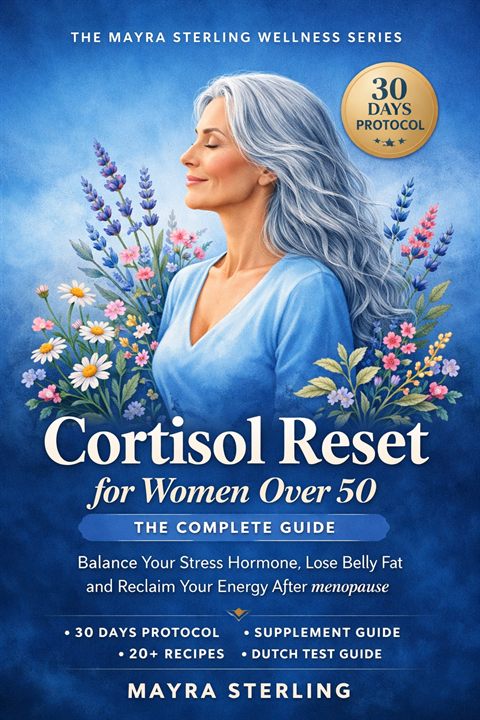 Cortisol Reset for Women Over 50
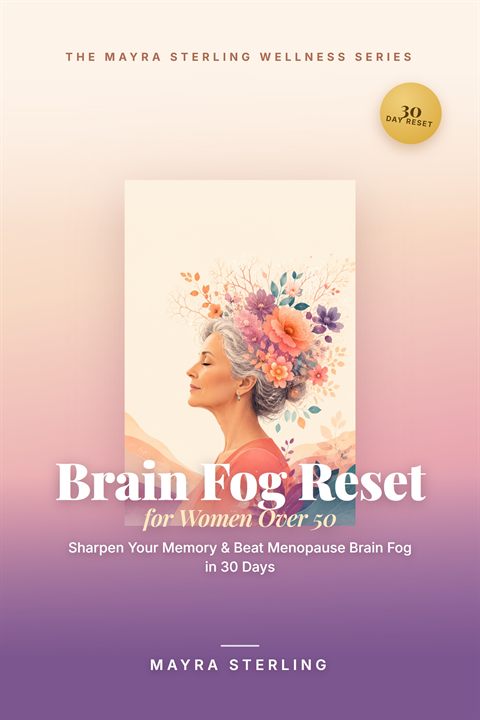 Brain Fog Reset for Women Over 50
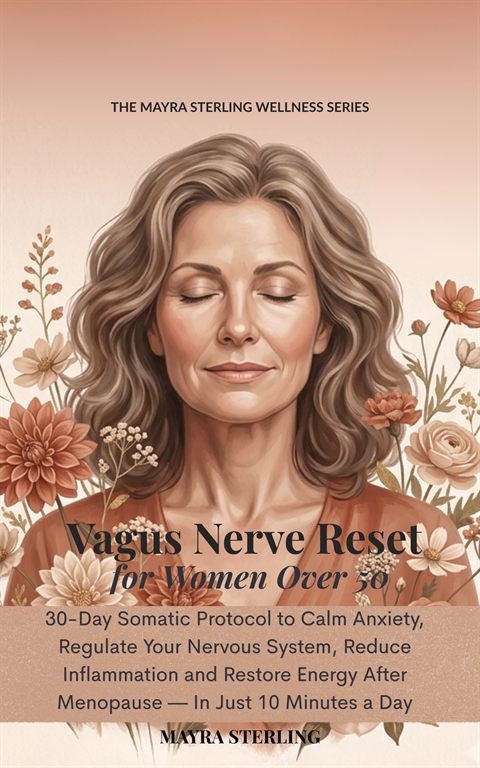 Vagus Nerve Reset for Women Over 50
 The Perimenopause Reset Workbook