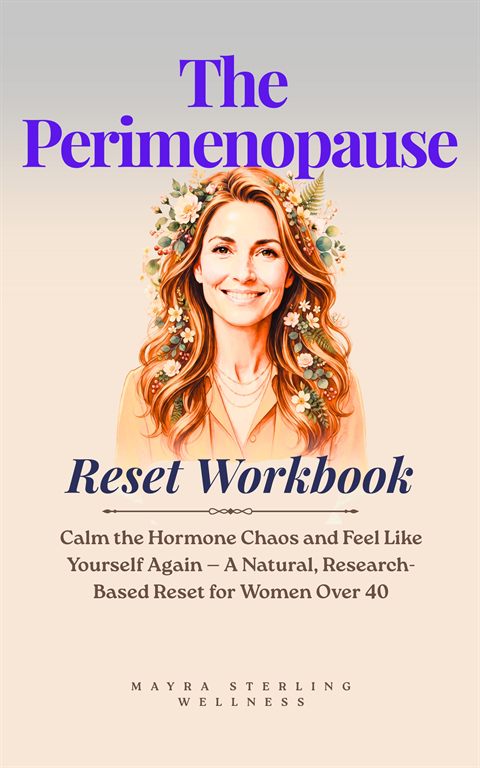
The short version: perimenopause is the years before your periods stop, and it is where most of the confusion lives. Hormones do not decline smoothly — they spike and crash, sometimes higher than they ever were, which is why the symptoms are so erratic and why standard blood tests so often come back normal. A test taken on the wrong day of an unpredictable cycle tells you very little, and a great many women are sent home on the strength of exactly that.
Why your blood tests keep coming back normal
This is the sentence that makes women feel mad, and it is the one the book takes apart first. In perimenopause, oestrogen does not simply fall. It fluctuates wildly — sometimes to levels higher than in your thirties, then crashing days later.
A single blood test captures one point on a line that is moving violently. Taken on a good day, it looks entirely normal. That result is accurate and, on its own, close to useless, and it is why so many women are told nothing is wrong while knowing perfectly well that something is.
Understanding that changes the conversation you have with your doctor — from “my tests are normal but I feel terrible” to something specific enough to act on. Chapter 11 is entirely about that conversation, including the actual words to use.
What perimenopause actually looks like
The workbook includes a 30-day tracker, and it is there for a specific reason: it turns “I feel terrible” into a written record of pattern and timing. That is the difference between a consultation that goes nowhere and one that does not.
Why it is worth the price
A straight answer, since you are entitled to one. There are a great many perimenopause books, and most of them are either 40 pages of encouragement or a medical textbook. This one is neither:
- It is 146 pages — a complete book, not a sample or a teaser for something else.
- There is nothing else to buy inside it — no upsell, no course, no supplement.
- It is the starting point for the rest of the series — sleep, cortisol, brain fog and gut health each take one part of it and go deeper.
- It comes with a 30-day tracker, so what you feel turns into something you can show a doctor.
If it helps you, the most useful thing you can do is leave a review. That is the whole exchange.
What is inside
What the workbook covers
- What is really happening during the hormone storm of perimenopause
- Why hormones spike and crash — and why standard blood tests so often miss it
- Sleep: the 3 a.m. waking and what sits underneath it
- Weight and body composition changing without your diet changing
- Gut health, bloating and digestion in the perimenopausal years
- Brain fog, memory and concentration
- Mood, anxiety and the emotional weather of perimenopause
- Natural, research-based strategies for each of the above
- A balanced, up-to-date look at HRT and its alternatives
- What the research can and cannot yet tell us — honestly
- The exact words to use so your doctor finally listens
- Your complete 30-day tracker
Chapter 11 is the one readers write in about. Prepared, not adversarial. Organised, not emotional. It is a short chapter and it changes how the appointment goes.
Get the complete workbook
146 pages, a 30-day tracker, and the chapter on what to say to your doctor. €9 as an ebook, or in paperback.
Get the workbookWho this is for
- Women over 40 whose bodies have changed and whose blood tests keep coming back normal.
- Anyone who suspects perimenopause but has been told they are too young for it.
- Women preparing for a GP appointment who want to arrive with a record rather than a description.
- Anyone weighing up HRT and wanting a balanced account before deciding.
Who it is not for: anyone wanting a prescription, a diagnosis, or dosing advice for DIY hormone use. It is deliberately honest about the limits of the research and it does not replace medical care — it prepares you for it.
Common questions
Why are my perimenopause blood tests normal when I feel terrible?
Because in perimenopause hormone levels do not decline steadily — they spike and crash, sometimes reaching levels higher than in your thirties before falling days later. A single blood test captures one point on a line that is moving violently, so a test taken on a good day looks entirely normal. The result is accurate and, on its own, tells you very little.
What age does perimenopause start?
Commonly in the forties, but it can begin in the late thirties, and it typically runs for several years before periods stop. Being told you are “too young” is one of the most frequent reasons women go years without an explanation.
How much does it cost?
The ebook is €9 on Google Play Books and on Gumroad. The paperback is a separate paid edition, because printing costs money. There is nothing else to buy inside the book.
Does it cover HRT?
It covers HRT and the alternatives in a balanced way, including what the current research does and does not support. It does not tell you what to decide, and it does not give dosing advice — that conversation belongs with your doctor, and the book is written to help you have it well.
How is this different from the other books in the series?
This is the map. Sleep, cortisol, brain fog, gut health and the vagus nerve each take one part of it and go far deeper. Start here, then follow whichever chapter described you best.
Sources and further reading
Independent information from public health organisations, if you want to check what this page says or read further:
About the author
Mayra Sterling writes practical wellness guides for women over 50 — on sleep, stress, brain fog, gut health and the nervous system. The books are built the way she wanted to be spoken to: no scare tactics, no supplement affiliate links, no promises of a cure. Just an honest explanation of what changed in your body and what you can do about it this week. More about Mayra.
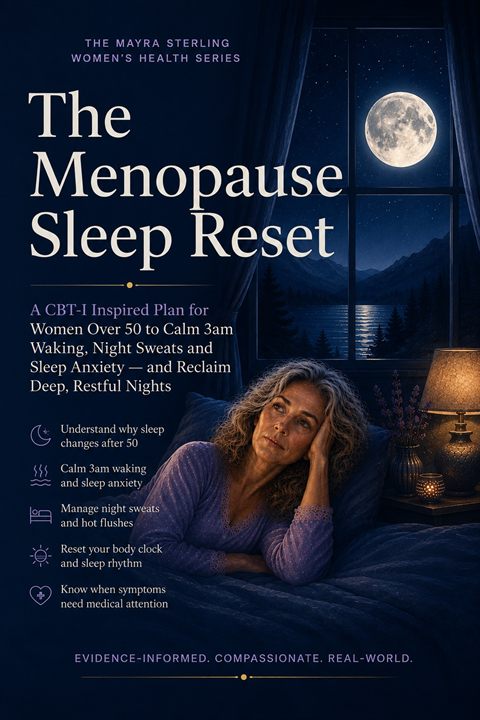 The Menopause Sleep Reset
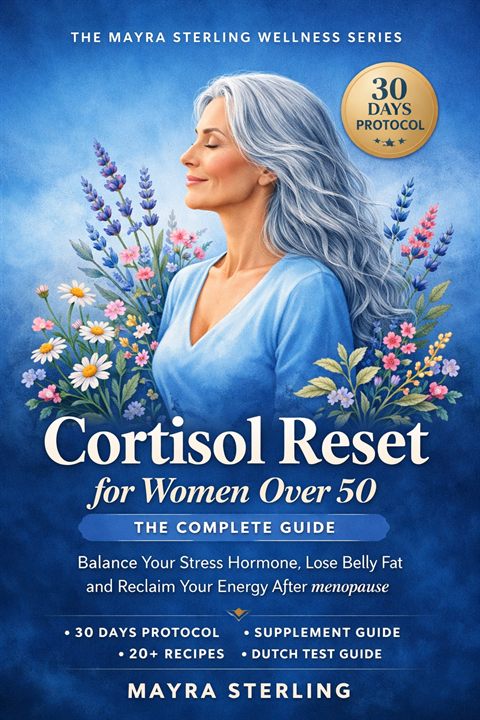 Cortisol Reset for Women Over 50
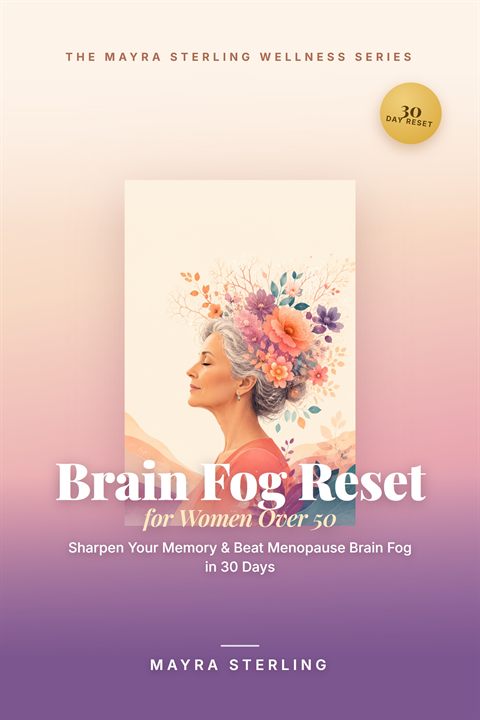 Brain Fog Reset for Women Over 50
 Nutrition & Supplementation in Menopause 50+