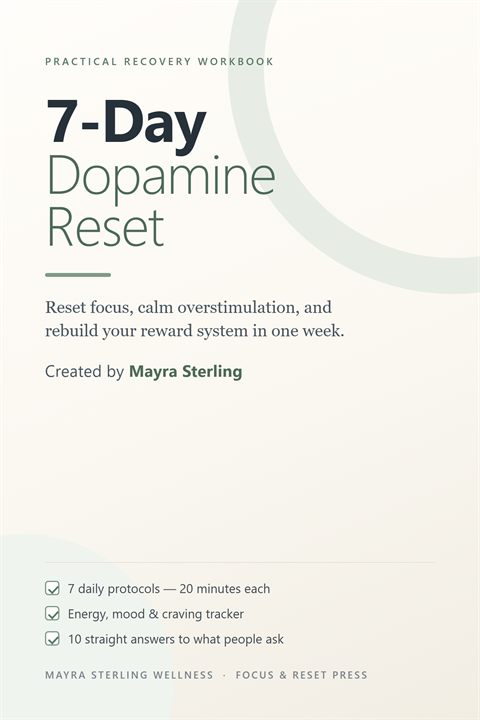
The short version: dopamine is not the pleasure chemical, and much of what is sold in its name is half-true. It runs your reward system — the network that decides what is worth wanting, and how much effort to spend getting it. That system has adapted to a world of constant, effortless, engineered stimulation. It is why the book on your bedside table has not moved in weeks, while the phone keeps calling you back.
What is really wearing it down
“Low dopamine” is not something a blood test can measure, and there is no simple home test for dopamine in the brain. But the experience people describe with those words is real: nothing feels rewarding, you cannot get going, and you keep reaching for quick fixes.
Far more often than a medical condition, it reflects everyday drains stacking up. Feeds, notifications and ultra-processed snacks that train the brain to register ordinary rewards less. Poor sleep — brain-imaging research from the US National Institute on Drug Abuse found that a single night without sleep reduces the availability of certain dopamine receptors. Long, unrelenting stress. Too many hours sitting still. Too little time with other people.
None of these is a character flaw, and none of them is fixed by willpower alone. The book explains each drain in plain language before it asks you to change anything.
Signs your reward system may be running low
The book includes a 15-question self-check, so you can take a snapshot before you start and compare it later. It is not a diagnostic test, and it comes with a clear list of the signs that mean seeing a doctor first.
What this book is not
The “dopamine detox” trend has collected a lot of nonsense, so it is worth being precise about what this book does and does not claim:
- It is not a detox. You cannot empty your brain of dopamine, and you would not want to.
- It is not deprivation. A day of sitting in silence does not reset anything.
- It is not a list of bans. Stopping a habit without adding something better leaves a gap the old habit quickly refills.
- It is not a treatment for ADHD, depression or addiction, and it says so plainly.
No hype. No miracle cures. A week will not rewire your brain, and no honest book should tell you otherwise. What a well-structured plan can do is lower the noise and give you back the first clear experience of focus, calm and enjoyment without a screen.
What is inside
What is inside
- Part One — Understand your dopamine: what it really does, the four feel-good chemicals, low dopamine signs and a self-check, the modern traps, and what science says about the dopamine detox
- Part Two — The seven pillars, one chapter each: Morning Light, Move Daily, Fuel Your Brain, Laser Focus, Real Joy, True Connection and Deep Rest
- Part Three — Dopamine through life: ADHD, women’s hormones and menopause, dopamine after fifty, love and relationships, children and screens
- Part Four — The 7-day plan, one day at a time
- Part Five — Make it last: goals, a 30-day plan, a 10-minute reset for bad days, and the 15 questions people ask most
- Sources and further reading
Each subject lives in one place only, so you never read the same advice twice. Every pillar chapter ends with a practical worksheet, and the plan tells you which chapter supports each day.
Get your focus and joy back
The complete book on Google Play Books — read it on Android, iOS or the web.
Get the book — $7.99Who this is for
- Anyone whose focus, energy or enjoyment of ordinary life has quietly slipped away.
- People who have tried deleting apps, lasted a few days, and want to understand why.
- Adults with ADHD traits looking for structure rather than another motivational lecture.
- Women noticing changes in motivation and mood around perimenopause and menopause.
Who it is not for: anyone looking for a diagnosis or treatment for ADHD, depression or addiction — this is an educational self-help book and it does not treat any of them. It is also not for anyone hoping for a quick trick; the change comes from what you keep doing after the first week.
Common questions
What are low dopamine symptoms?
People usually mean a pattern: trouble starting tasks, things feeling flat, needing more stimulation to feel normal, brain fog, tiredness with restlessness, and cravings for quick hits. None of these alone proves anything, and many have other causes — which is why the book lists the signs that mean seeing a doctor first.
Can a blood test show low dopamine?
No. Dopamine in your blood tells doctors almost nothing about dopamine in your brain, and there is no simple home test. What the book offers instead is a self-check to take a snapshot of how your reward system feels, so you can compare over time.
Is a dopamine detox real?
The name is misleading. You cannot empty your brain of dopamine — it is made continuously. But the idea underneath, taking a deliberate break from the specific habits that have become compulsive for you, is sound when it is done well. The book explains what is supported and what is myth.
Will this help with ADHD?
The book has a full chapter on dopamine and ADHD, and many people with ADHD traits find the structure useful. But it is an educational self-help book, not a treatment, and it sits alongside proper care rather than instead of it.
Does it cover menopause?
Yes. A dedicated chapter looks at dopamine and women’s hormones through the cycle, perimenopause and menopause, and another at dopamine after fifty.
About the author
Mayra Sterling writes practical wellness guides for women over 50 — on sleep, stress, brain fog, gut health and the nervous system. The books are built the way she wanted to be spoken to: no scare tactics, no supplement affiliate links, no promises of a cure. Just an honest explanation of what changed in your body and what you can do about it this week. More about Mayra.
 Brain Fog Reset for Women Over 50
 Cortisol Reset for Women Over 50
 The Menopause Sleep Reset
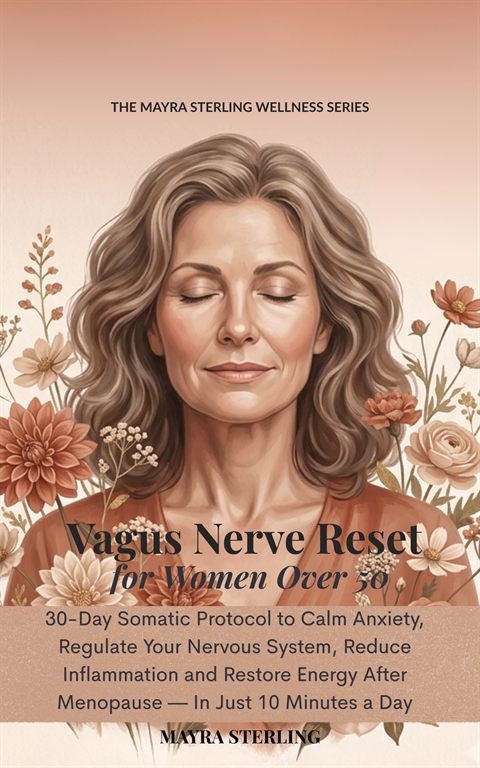 Vagus Nerve Reset for Women Over 50